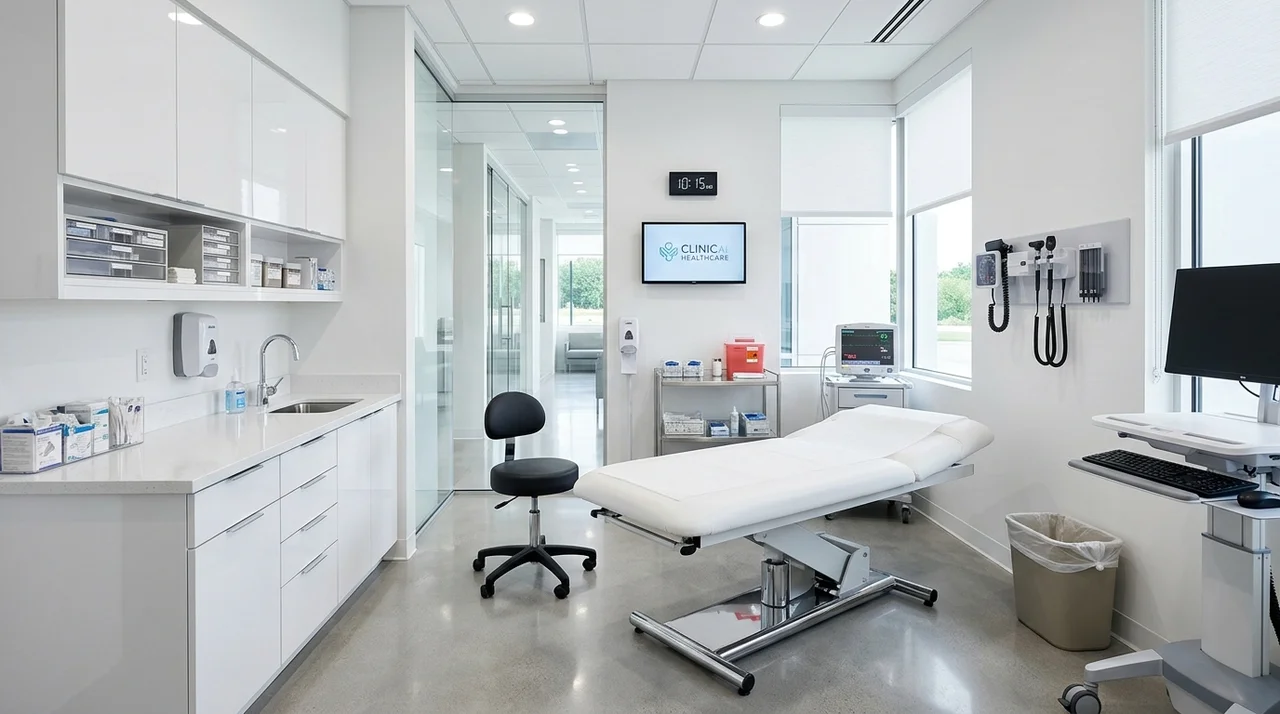
Medical office cleaning in Nashville, TN covers two fundamentally different responsibilities. The first is the specialized clinical turnaround work your clinical staff executes between patients: sterilizing surgical instruments, wiping down operatory treatment chairs, and handling surfaces in direct contact with blood or saliva. The second is the comprehensive, after-hours facility clean of the remainder of the building: waiting rooms, reception desks, corridors, restrooms, administrative offices, and common touchpoints. This guide focuses on that second responsibility—often referred to in commercial healthcare facility maintenance as the terminal clean—and defines where janitorial duties end and clinical team responsibilities begin.
In healthcare facility management, “terminal cleaning” can carry varying definitions depending on whether a facility is an acute care surgical suite or an outpatient specialty practice. In this guide, we use the term to designate the meticulous end-of-day or after-hours cleaning and disinfection of the non-clinical and environmental zones of your facility. Whatever terminology your janitorial contractor uses, ensure every task, zone, and exclusion is documented in writing. This guide is crafted for medical practice managers, dentists, clinic owners, and healthcare facility directors throughout Nashville and Middle Tennessee who are hiring or evaluating commercial healthcare janitorial partners.
Infection Control & Guidance Notice: CDC infection control guidance referenced in this guide provides specific parameters established for dental healthcare settings. Outpatient medical clinics, ambulatory surgery centers, and specialty practices should align their vendor scopes directly with their internal Infection Control Plan and facility accreditation standards. This document provides operational facility guidance, not medical, legal, or formal infection-control advisory counsel.
- Strict Division of Responsibilities: Clinical contact surfaces, sterilization areas, and tasks involving biohazard waste or sharps should remain exclusively with your trained clinical staff. Commercial janitorial crews should manage environmental housekeeping surfaces (floors, waiting areas, restrooms, administrative spaces).
- CDC Surface Classification: Under CDC dental infection prevention guidance (CDC, May 15, 2024), environmental housekeeping surfaces (floors, walls, sinks) do not require high-level sterilants and can be cleaned with detergent and water or hospital-grade EPA disinfectants when blood contamination is present.
- Employer Accountability Under OSHA (29 CFR 1910.1030): OSHA’s Bloodborne Pathogens standard requires employers to implement a written cleaning and decontamination schedule. Contracting a commercial cleaner does not transfer employer liability—the regulatory duty remains with your practice.
- Explicit Contract Boundaries: Formally define in writing who manages sharps disposal, regulated red-bag medical waste, hazardous spills, and after-hours access to locked patient record and medication rooms.
What Does a Terminal Clean Include in a Clinic or Dental Office?
Your facility’s cleaning scope must directly reflect your practice type, patient volume, and written Exposure Control Plan. The matrix below outlines our recommended operational task division between commercial janitorial crews and certified clinical personnel:
For an overview of wider facility maintenance capabilities, explore our specialized medical office cleaning services and our general commercial janitorial solutions guide.
What Does the CDC Say About Cleaning Healthcare Surfaces?
The Centers for Disease Control and Prevention (CDC) divides healthcare environmental surfaces into two distinct categories, which establishes the scientific foundation for task allocation:
- Clinical Contact Surfaces: Components such as operatory light handles, switches, radiographic equipment, dental unit delivery trays, and chairside touchscreens. Because these items have a high potential for contamination via aerosolized spray, splatter, or gloved hands during procedures, the CDC recommends protecting them with disposable FDA-approved surface barriers (changed between patients) or cleaning followed by treatment with an intermediate-level, EPA-registered hospital disinfectant.
- Housekeeping Surfaces: Environmental building components including floors, walls, administrative casework, and non-clinical sinks. The CDC explicitly notes that housekeeping surfaces do not directly contact patients or medical instruments and carry a substantially lower risk of pathogen transmission. Consequently, they can be decontaminated using less aggressive methods, such as soap and water, or hospital-grade disinfectants when visibly soiled with blood or bodily fluids.
The CDC further specifies that reusable mop heads and microfiber cloths must be laundered after each shift and allowed to dry completely before reuse (or replaced with single-use mop systems). Disinfecting solutions must be freshly mixed according to manufacturer dilution ratios daily, and mechanical cleaning with detergent must always precede chemical disinfection because organic soils prevent chemical penetration.
What Does OSHA’s Bloodborne Pathogens Standard Require?
OSHA’s Bloodborne Pathogens Standard (29 CFR 1910.1030) establishes mandatory workplace safety regulations for all employers whose personnel face occupational exposure to blood or other potentially infectious materials (OPIM), including saliva in dental operations. Paragraph (d)(4) mandates specific housekeeping requirements:
- Maintain a Sanitary Worksite & Written Schedule: Employers must determine and implement an appropriate written cleaning and decontamination schedule based upon location within the facility, surface types, soil types, and tasks performed in each zone.
- Post-Contamination Decontamination: Work surfaces and equipment must be decontaminated with an appropriate disinfectant immediately or as soon as feasible following spills or bodily fluid contamination, and at the end of the work shift.
- Mechanical Handling of Broken Glass: Contaminated broken glassware must never be gathered by hand. Personnel must utilize mechanical devices such as forceps, tongs, or a dedicated brush and dustpan.
- Sharps & Regulated Waste Management: Sharps containers must be puncture-resistant, leakproof, closable, labeled or color-coded, and maintained in easily accessible areas without being allowed to overfill.
In Tennessee, private employers operate under TOSHA (Tennessee Occupational Safety and Health Administration). While outsourcing your terminal clean to a qualified contractor provides professional execution, it does not relieve your medical practice of legal employer responsibility under OSHA/TOSHA. For that reason, practice owners should explicitly establish that biohazard sharps and primary spill responses remain with trained in-house staff.
Chemical Protocols, SDS, and Technician Training
Commercial healthcare cleaning requires chemical discipline under OSHA’s Hazard Communication Standard (29 CFR 1910.1200). Before awarding a medical cleaning contract, audit the vendor on four points:
- Pre-Approved Chemical Formulary: Verify which EPA-registered hospital disinfectants the contractor uses and confirm they match your facility’s approved disinfectant list.
- Manufacturer Contact Time Compliance: Ensure cleaners are trained in chemical dwell times (the specific duration a surface must stay wet to neutralize pathogens).
- Staff Hazard Recognition: Verify janitorial technicians are trained to identify and avoid hazards—such as an unshielded sharp or unattended blood specimen—and know the exact clinic escalation contact.
- Safety Data Sheets (SDS): Ensure complete SDS documentation is maintained on-site in a designated binder, with all secondary containers properly labeled under GHS regulations.
Facility Security, HIPAA Privacy, and Access Protocols
Medical and dental clinics house protected health information (PHI), pharmaceuticals, and valuable diagnostic equipment. Your commercial cleaning agreement must address physical access and patient data security:
- Named Staff Rosters: Require assigned, consistent cleaning technicians with mandatory advance written notice before substitute staff access the facility.
- Key & Electronic Credential Security: Establish strict keycard and alarm code tracking with immediate reporting penalties if a credential is compromised.
- Employee Background Screening: Require certified background checks for all assigned personnel in writing.
- Restricted Access Zones: Clearly identify locked areas where cleaners are barred from entering, including medication closets, paper medical records rooms, and server rooms.
- HIPAA Compliance & Clean Desk Protocols: Practice staff should lock away patient files and power down clinical monitors prior to cleaning crews entering the premises. Review our complete guide to what to include in a commercial cleaning contract.
When Should the Terminal Clean Take Place?
The most effective and compliant window for terminal cleaning is strictly after operating hours when patients and clinical personnel have departed. Establish three operational protocols in your agreement:
- Fixed Start Window: Schedule cleaning to commence 30 to 60 minutes after the final scheduled patient, ensuring your clinical team has completed instrument autoclaving and operatory turnover.
- Clinical Handoff Procedure: Clinical staff lock medication storage, confirm sharps containers are secured, and clear counter surfaces before the commercial crew begins work.
- Urgent Incident Response: Define an agreed-upon procedure for emergency after-hours sanitization following water intrusions or contamination events.
How to Choose a Medical Office Cleaning Company in Nashville
Evaluate healthcare cleaning contractors across Middle Tennessee against an objective 9-point checklist:
- Walk the Entire Facility Together: Inspect waiting rooms, operatory flooring, restrooms, staff lounges, and mechanical rooms.
- Bid Against an Identical Written Scope: Ensure every bidder quotes identical hours, frequencies, and tasks. Consult our commercial cleaning pricing guide for regional benchmarks.
- Verify Healthcare Training & Hazard Protocols: Inquire specifically about bloodborne pathogen training and technician hazard reporting.
- Explicitly Define Excluded Clinical Tasks: Confirm in writing that clinical contact surfaces, autoclaves, and sharps handling remain with your practice.
- Audit Disinfectants & Contact Times: Review EPA registration numbers and dwell time verification methods.
- Confirm Security & Key Controls: Validate named crew policies and background check certifications.
- Verify Comprehensive Insurance: Request a direct Certificate of Insurance (COI) confirming general liability, workers’ compensation, and additional insured status.
- Contact Clinic & Dental References: Speak with at least two practice administrators in the Nashville area.
- Establish Inspection & Quality Metrics: Ensure clear supervisor inspection intervals and 24-hour correction windows. Review our guide to evaluating professional commercial cleaning contractors.
Where Does TNT Commercial Services 615 Work?
TNT Commercial Services 615 is an owner-operated commercial janitorial contractor headquartered at 4900 Centennial Blvd, Nashville, TN 37209. Our crews provide specialized facility maintenance and commercial cleaning across Davidson County, Williamson County, Rutherford County, Wilson County, and Sumner County—including Nashville, Brentwood, Franklin, Hendersonville, Murfreesboro, and Mount Juliet. Learn more about our complete commercial services via our services list and our regional guide to commercial cleaning in Nashville, TN.
Frequently Asked Questions
What is terminal cleaning in a medical or dental office?
In outpatient and dental settings, terminal cleaning refers to the thorough, end-of-day decontamination of all environmental housekeeping surfaces (waiting rooms, reception check-in, restrooms, and hard operatory floors). It differs from between-patient room turnover, which is executed by clinical staff on patient contact surfaces.
Does a janitorial company clean clinical surfaces and instruments?
We strongly recommend against this. High-touch clinical surfaces, delivery units, operatory trays, and autoclave sterilization belong strictly to trained clinical staff under your facility Infection Control Plan. CDC guidelines treat clinical contact surfaces differently from housekeeping surfaces.
Who handles sharps containers and regulated medical waste?
Regulated medical waste and sharps containers must be managed exclusively by your clinical team and licensed medical waste haulers. Commercial janitorial crews should be trained to recognize sharps containers and avoid tampering with or transporting biohazard waste under OSHA 29 CFR 1910.1030.
Does hiring a commercial cleaner make my practice OSHA compliant?
No. While a competent commercial cleaner supports your physical facility maintenance, hiring an outside contractor does not transfer employer responsibility. Your practice remains legally accountable for establishing, enforcing, and maintaining written Exposure Control Plans and Bloodborne Pathogens training.
When should a medical clinic or dental office be cleaned?
Terminal janitorial cleaning should take place strictly after-hours when patients and clinical staff have departed. This eliminates patient exposure to chemical vapors, guarantees proper surface dwell times, and ensures clinical handoffs are complete before environmental maintenance begins.
About this guide
This guide was prepared by the TNT Commercial Services 615 technical operations team. Dental infection prevention standards reference guidance published by the Centers for Disease Control and Prevention (CDC, published May 15, 2024), along with general facility guidance (CDC, page dated April 16, 2024). Occupational safety regulations cite OSHA 29 CFR 1910.1030 (Bloodborne Pathogens) and 29 CFR 1910.1200 (Hazard Communication) as published by Cornell Law School’s Legal Information Institute. Scope frameworks, task allocations, and contractor vetting criteria represent professional janitorial recommendations. Healthcare providers should review specific clinical compliance and liability requirements with their compliance officer and medical malpractice broker.