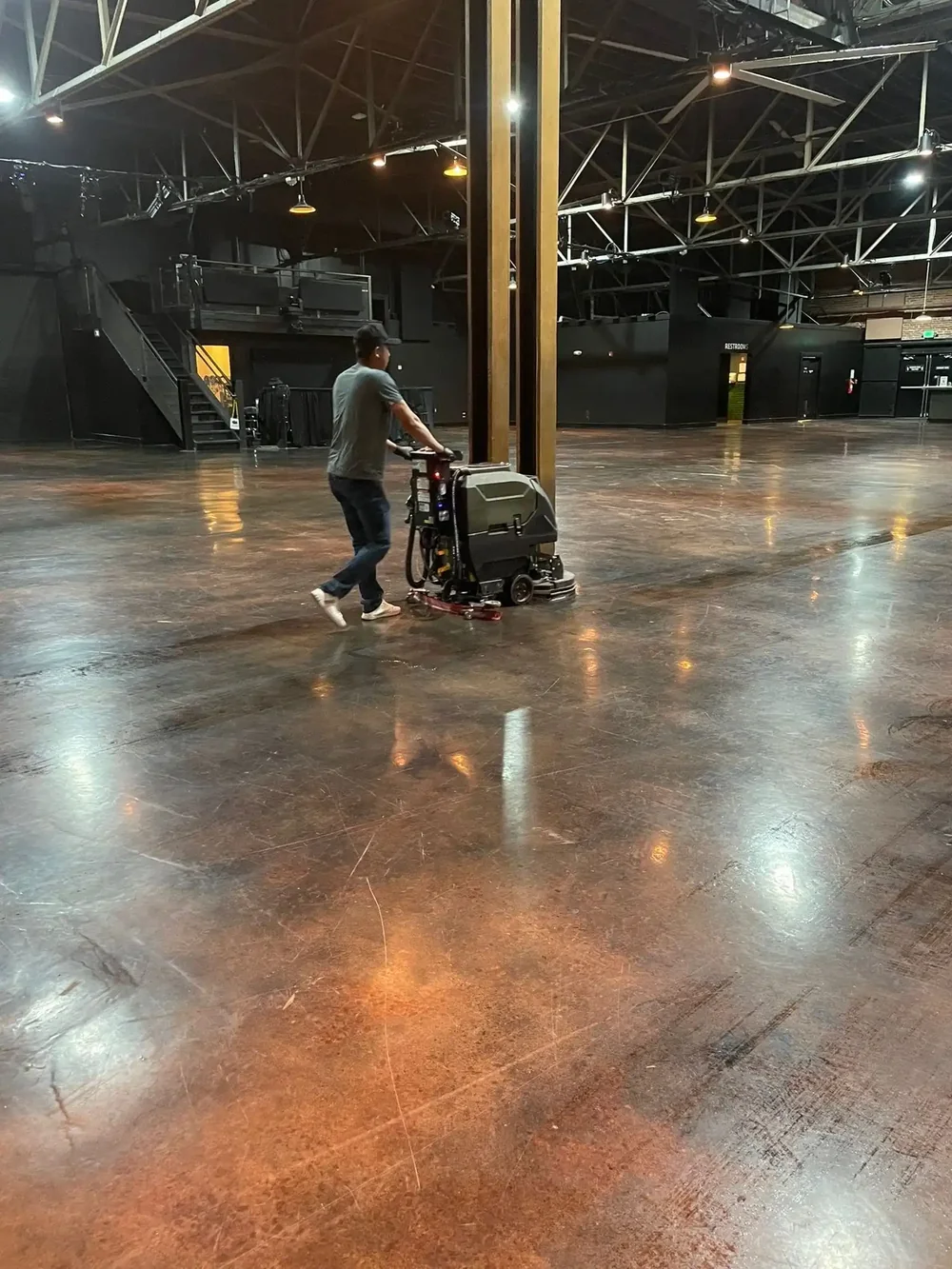
- Night Crew: The standard choice for the full, uninterrupted clean—trash collection, floor care, deep restroom sanitation, and surface disinfection when the building is vacant.
- Day Porter: Provides daytime upkeep, restroom restocking, spill response, and lobby presentation while occupants and clients are in the facility.
- Hybrid Model: Combines daytime porter coverage for high-touch maintenance with an after-hours crew for deep floor work and vacuuming; ideal for multi-tenant or heavy-traffic properties.
- Decision Framework: Your choice depends on foot traffic density, visitor visibility, response speed needs, budget constraints, and measurable performance standards.
A janitorial plan has two parts: what gets cleaned and when. A night crew that finishes before the first employee arrives is the default for many offices. A day porter who is on site during business hours is the alternative. A hybrid of the two is common in busy buildings. Each model solves a different problem, and choosing the wrong one means paying for cleaning that does not fix what your occupants actually notice.
In short: a night crew is the usual choice for the full clean, a day porter adds daytime upkeep, and a hybrid suits busy buildings. This article compares the three models, explains when each tends to fit, and gives you a short checklist for deciding. It is written for office managers, property managers, and facility managers who are setting up or reviewing a janitorial program.
What Is the Difference Between a Day Porter and a Night Crew?
Understanding the operational differences between these two roles prevents overlapping tasks and ensures every cleaning dollar addresses visible facility priorities:
- A night crew (or after-hours crew): Cleans when the building is mostly empty. The usual scope is the full routine: trash collection, vacuuming, mopping, restrooms, breakrooms, and surfaces. Working after hours means fewer interruptions, easier floor care, and no one in the way of equipment or wet surfaces.
- A day porter: Janitorial staff who work on site during business hours. The role is lighter and more responsive: restocking restrooms, wiping up spills, emptying overflowing bins, tidying the lobby, and keeping shared areas presentable between deeper cleans. Buildings with heavy foot traffic are where the role tends to earn its keep, but the right fit depends on your traffic volume and tenant mix.
- A hybrid model: Uses both shifts strategically: an after-hours night crew for the comprehensive deep clean and a day porter for ongoing upkeep while people are actively using the building.
When Does a Night Crew Alone Make Sense?
A night crew by itself tends to fit when:
- Foot traffic is moderate and predictable, such as a standard professional office with a single consistent tenant.
- Shared areas stay presentable through the day without requiring continuous intervention.
- Budget is a primary consideration and a single nightly visit consistently meets your facility standard.
- Floor work and deep cleaning matter most, since tasks like burnishing, machine mopping, and vacuuming are most efficient when spaces are vacant.
When Is a Day Porter Worth Adding?
A day porter is worth considering when:
- Restrooms and breakrooms see heavy daily use, and executive visitors or clients notice supply shortages or untidiness.
- Clients, patients, or the public frequently enter the building, making the reception lobby a direct reflection of your brand image.
- Spills, trash overflows, and messes require a same-hour response, such as in busy communal breakrooms or cafeteria areas.
- Multiple commercial tenants share common amenities, where no single occupant assumes responsibility for daytime upkeep.
The CDC advises cleaning high-touch surfaces regularly and notes that busy areas may need more frequent cleaning or added disinfection (CDC, When and How to Clean and Disinfect a Facility, April 16, 2024). A day porter provides a structured mechanism to introduce that daytime frequency between scheduled nightly visits.
What Does a Hybrid Janitorial Program Look Like?
A hybrid janitorial model divides responsibilities according to what each shift executes most efficiently:
| Task Category | Night Crew (After-Hours) | Day Porter (Business Hours) |
|---|---|---|
| Vacuuming and Mopping | Yes (Full building floor care) | Spot-clean only as needed |
| Deep Restroom Sanitation | Yes (Fixtures, partitions, mop) | Restock soap/paper & quick checks |
| Trash & Recycling | Full desk-by-desk collection | Empty common bins that fill early |
| Lobby & Main Entrance | Full detail clean & glass wipe | Keep tidy & wipe door glass |
| Breakroom / Cafeteria | Full scrub, appliance wipe, mop | Wipe counters & refill supplies |
| Spills & Daytime Incidents | Not on site during day | Immediate response during business hours |
| Periodic Deep Care (Floors/Windows) | Scheduled after hours / weekends | Not usually included in porter shift |
This division is a starting template based on established commercial practice. The key is to document each shift’s exact task list in your service agreement so nothing is missed or billed twice. For wider scope guidance, review our commercial janitorial solutions.
How Do You Decide? A Five-Question Checklist
Facility managers can determine whether to add daytime porter coverage by evaluating these five operational questions:
- How many people use the building, and when? Higher daytime occupancy and frequent visitor turnover point directly toward adding a day porter to manage supply replenishment and high-traffic zones.
- Who sees the building? If clients, patients, investors, or the general public enter your facility, the operational stakes for clean lobbies and fully stocked restrooms are substantially higher.
- How fast do problems need fixing? If your operations require a same-hour response for spills, full bins, or restroom issues, nightly service alone cannot deliver it.
- What can you spend? A day porter introduces dedicated daytime labor hours. Price both options—night crew alone vs. a hybrid model—against the exact same written scope before making a final commitment. See our commercial cleaning pricing guide for cost structures.
- Can you measure the result? Select one or two measurable metrics, such as supply stock-out reports, response time to daytime spills, or tenant ticket volume, and evaluate them after 30 to 60 days.
How Do You Write It Down and Compare Providers?
Whichever model you choose, put it in writing. List each specific area, the tasks assigned to it, and their completion frequencies, alongside a clear exclusions clause. If you operate a hybrid program, clearly define which shift handles which tasks so responsibilities do not overlap or fall through the cracks. Agree on how quality will be audited and how quickly reported misses must be corrected.
When soliciting bids from commercial cleaning vendors in Nashville, provide each bidder with the identical written scope priced both ways: (1) night crew alone, and (2) night crew plus day porter. Require all bidders to quote against the same standard metrics: price per visit, monthly flat fee, estimated hours on site, and crew size. Request a current Certificate of Insurance (COI) naming your business as additional insured, and verify how cleaners are vetted, trained, and supervised. Any quote delivered without an in-person facility walkthrough is merely guesswork. For contract terms, consult our commercial cleaning contract guide.
Frequently Asked Questions
What is the difference between a day porter and a night cleaning crew?
A night crew performs the comprehensive, heavy routine cleaning after business hours when the building is empty—such as full vacuuming, wet mopping, complete trash collection, and deep restroom sanitization. A day porter works during operational hours to maintain shared areas, restock restrooms, manage immediate spills, and keep lobbies and breakrooms presentable for occupants and visitors.
Can a day porter replace a night cleaning crew?
Rarely. In most commercial facilities, heavy tasks like loud vacuuming, wet floor mopping, and thorough desk dusting cannot be performed efficiently while staff and clients are present. Attempting to replace after-hours deep cleaning with daytime staff usually results in workplace disruption and uncleaned private offices.
When is a hybrid janitorial program recommended?
A hybrid program is recommended for buildings with high daily foot traffic (such as medical clinics, corporate headquarters, multi-tenant office complexes, or schools) where daytime restrooms and breakrooms quickly become depleted or untidy, but thorough floor care and sanitization must still take place after hours.
How do I compare quotes for day porter vs. night crew services?
Provide all prospective vendors with an identical written scope of work and ask them to price it two ways: (1) night crew only, and (2) night crew with daytime porter hours. Request a breakdown of monthly costs, billable hours on site, crew size, and supervisor oversight ratios.
About the Author
Tavarus Taylor is the Co-Founder and CEO of TNT Commercial Services 615, an owner-operated commercial cleaning company located at 4900 Centennial Blvd, Nashville, Tennessee. TNT Commercial Services 615 provides bonded and insured day porter, night janitorial, and specialty commercial cleaning across Davidson County and surrounding Middle Tennessee communities. Learn more about our janitorial services in Nashville, TN or schedule a facility consultation.